Source eco friendly anime keychain for Souvenirs, Gifts, and Decor
Compare 30 listings of eco friendly anime keychain featuring zinc alloy and plastic materials with customizable logos. Buyers can review options for promotion gifts, personal decorations, and souvenirs with varying MOQs and processing methods.
Key considerations
Products List




Comprehensive Sourcing Guide
Strategic Sourcing Guide for Eco-Friendly Anime Keychains
Understanding the Product Category and Material Foundations
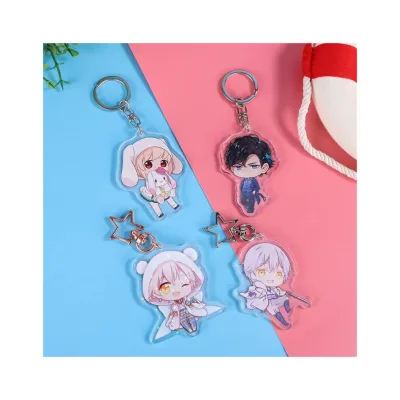
Sourcing eco-friendly anime keychains requires a nuanced understanding of the intersection between pop culture aesthetics and sustainable manufacturing practices. In the current B2B landscape, these items are not merely promotional novelties but are increasingly categorized as personal decorations, souvenirs, and home decorations that serve as commerce gifts. The core appeal lies in the "cute" and "creative" styles that resonate with anime enthusiasts, yet the procurement strategy must prioritize materials that align with environmental stewardship.
Based on available market data, the primary material composition for these keychains often involves Zinc Alloy or Plastic. Zinc alloy is frequently utilized for its durability and ability to undergo complex processing techniques such as die-casting, which allows for the intricate detailing required for anime character designs. The alloy is often treated with electroplating to achieve finishes in gold, silver, or nickel, enhancing the visual appeal. Conversely, plastic options offer a lighter alternative, though the "eco-friendly" designation for plastic products necessitates a deeper inquiry into the specific polymer type and recyclability, as standard plastics may not inherently meet sustainability criteria without specific processing claims.
The manufacturing process is a critical differentiator. High-quality keychains often employ a semi-manual approach combined with automated die-casting and setting diamonds or other embellishments. This hybrid method ensures that the delicate features of anime characters are preserved while maintaining production efficiency. The surface treatment is equally vital; electroplating and painting are standard processes used to protect the metal from corrosion and to apply vibrant colors. Buyers must verify that the "eco-friendly" claim is substantiated by the absence of hazardous substances in the plating and painting processes, rather than relying solely on marketing terminology.
Technical Specifications and Customization Capabilities
When evaluating potential suppliers for anime keychains, technical specifications serve as the primary filter for quality and compatibility. The product model numbers vary significantly, ranging from specific identifiers like KSG-3103(Gold) to generic descriptors like "key chain" or model numbers such as Xyh-Kc036. These variations indicate a highly customized market where standardization is less common than bespoke production.
A defining characteristic of this product category is the flexibility in size and shape. Specifications often list "Requested" or "Customer Size," indicating that dimensions are not fixed but are tailored to the specific design requirements of the anime character or the branding needs of the buyer. The shape is frequently described as "Geometry" or custom-formed, allowing for a wide array of silhouettes. The logo application is another critical technical aspect. Suppliers typically offer options for laser engraving, silkscreen printing, or letterpress printing. The choice of print method depends on the material; for instance, metal keychains often utilize laser engraving for a permanent, high-contrast finish, while plastic variants may rely on silkscreen or direct printing.
Customization extends beyond the visual design to the packaging and functional attributes. The standard packaging often includes OPP bags, polybags, velvet pouches, or gift boxes, with the option to sell directly or as a gift. The "Customized" status is a high-confidence attribute, meaning that almost every supplier in this space is prepared to adapt the product to specific client needs. This includes the ability to produce OEM (Original Equipment Manufacturer) goods, where the buyer's branding is integrated into the product. The "Single package size" is often listed as variable (e.g., XX cm), reinforcing the need for buyers to request specific dimensional data for logistics planning.
Compliance, Certification, and Environmental Verification
The term "eco-friendly" in the context of anime keychains requires rigorous verification, as it is not a universally regulated standard without specific context. While some background information suggests certifications like FSC or OEKO-TEX, these are often associated with paper or textile products rather than metal or plastic keychains. Therefore, buyers should not assume these certifications apply to the core product without explicit confirmation from the supplier.
Instead, the focus should be on verifying the "Eco-Friendly" attribute through material safety and production standards. For metal keychains made of Zinc Alloy, the critical compliance check involves the plating process. Buyers must ensure that the electroplating does not involve hexavalent chromium or other restricted heavy metals. The presence of an "SGS" standard in some product listings indicates that third-party testing is available, but this is a specific instance rather than a universal guarantee. Buyers should request current test reports from SGS or equivalent accredited laboratories to verify that the products meet international safety standards for toys and general merchandise.
Furthermore, the "Customized" standard often implies that the production process can be adapted to meet specific regional regulations. For example, products destined for the European market may need to comply with REACH regulations, which restrict the use of certain substances. The "Regional Feature: Europe" mentioned in some product data suggests that some suppliers are already aligned with these standards, but this should be treated as an observation of specific listings rather than a blanket rule for all suppliers. Buyers must explicitly ask for compliance documentation regarding the specific destination market to avoid customs delays or legal issues.
Cost Drivers and Pricing Dynamics
The pricing of eco-friendly anime keychains is influenced by a complex matrix of factors, including material costs, processing complexity, and order volume. The observed price range in the market spans from $0.06 to $1.65 USD, a significant variance that reflects differences in material quality, customization depth, and production scale. The lower end of the spectrum typically corresponds to simple plastic keychains with basic printing, while the higher end reflects zinc alloy products with intricate die-casting, electroplating, and diamond setting.
The Minimum Order Quantity (MOQ) is another critical cost driver. The observed MOQ range is vast, from as low as 1 unit to as high as 2000 units. A low MOQ of 1 or 50 pieces allows for small-batch testing and prototyping, which is ideal for startups or limited-edition anime releases. However, higher MOQs often result in a lower unit cost due to economies of scale in the die-casting and plating processes. Buyers must balance the need for customization with the financial constraints of the order volume.
Additional cost factors include the specific surface treatments and packaging. Options like velvet pouches or gift boxes add to the unit cost but enhance the perceived value of the product as a "Promotion Gift" or "Souvenir." The "Semi-Manual" processing method also impacts pricing, as labor-intensive techniques generally command a premium over fully automated production. Buyers should request detailed cost breakdowns that separate material, processing, and packaging costs to understand where savings can be achieved without compromising the "eco-friendly" integrity of the product.
Supplier Evaluation and Geographic Considerations
Evaluating suppliers for anime keychains requires a focus on their manufacturing capabilities and geographic location. The primary production hubs identified in the market data are located in China, specifically in regions like Zhongshan, Guangdong, and Jiangsu. These areas are known for their robust metalworking and plastic molding industries, offering a wide range of processing techniques from die-casting to electroplating.
When assessing a supplier, buyers should verify their "Brand Name" and "OEM" capabilities. While specific brand names like "Xyh Crafts" or "Badgegifts" appear in listings, the procurement strategy should not rely on these specific entities but rather on the supplier's ability to deliver on the "OEM: Yes" promise. A capable supplier will demonstrate a clear workflow for handling custom logos, sizes, and designs. The "Customization: Available" and "Customized: Customized" attributes suggest that flexibility is a baseline expectation, but the depth of this customization—such as the ability to handle complex anime character molds—must be validated through portfolio reviews.
Geographic proximity to the buyer's market can influence lead times and shipping costs. While the "Place of Origin" is consistently listed as China, the specific province (Guangdong vs. Jiangsu) may affect the type of expertise available. Guangdong is historically a hub for metal crafts and electroplating, while Jiangsu may have strengths in plastic molding. Buyers should inquire about the specific factory location to ensure the supplier has the requisite technical expertise for the chosen material and processing method.
Quality Control and Long-Term Procurement Strategy
Ensuring consistent quality in eco-friendly anime keychains involves a multi-stage quality control (QC) process. Given the "Semi-Manual" nature of the production, human error can be a variable. QC checks should focus on the integrity of the electroplating, the precision of the die-casting, and the accuracy of the logo printing. For metal keychains, checks should include verifying the plating thickness and adhesion to prevent peeling or tarnishing. For plastic variants, the focus should be on material consistency and the absence of flash or molding defects.
Long-term procurement considerations extend beyond the initial order. Buyers should establish a relationship with suppliers who can maintain consistency across multiple production runs. The "Customized" nature of the product means that tooling costs may be incurred upfront, making it essential to secure a supplier who is willing to maintain molds and tooling for future reorders. Additionally, the "Eco-Friendly" claim must be sustained over time. Buyers should require suppliers to commit to using consistent, certified materials and processes for all future orders, rather than allowing for material substitutions that could compromise the product's environmental profile.
The "Function: Metal Keychain Gift Send" highlights the product's role in gifting and promotion. This usage context demands a high level of aesthetic perfection. Any defect in the "Cute" or "Creative" design elements can significantly reduce the product's effectiveness as a promotional item. Therefore, a robust QC protocol that includes pre-shipment inspections is non-negotiable. Buyers should also consider the "prod_packing" options, ensuring that the packaging protects the product during transit while maintaining the "Eco-Friendly" ethos, perhaps by using recyclable materials for the OPP bags or polybags.
Conclusion and Strategic Recommendations
Sourcing eco-friendly anime keychains is a strategic endeavor that balances aesthetic appeal with environmental responsibility. The market offers a diverse range of options, from simple plastic keychains to intricate zinc alloy designs, each with its own set of technical and compliance requirements. Buyers must navigate the complexities of material selection, customization, and certification to ensure that the final product meets both their brand values and customer expectations.
The key to success lies in rigorous supplier evaluation, clear communication of technical specifications, and a commitment to verifying environmental claims through third-party testing. By focusing on the specific attributes of die-casting, electroplating, and custom printing, buyers can identify suppliers capable of delivering high-quality, sustainable products. The wide range of MOQs and price points allows for flexibility in procurement strategies, enabling buyers to scale their orders based on demand while maintaining cost efficiency. Ultimately, a disciplined approach to sourcing, grounded in the facts of material composition and processing capabilities, will ensure the delivery of premium anime keychains that resonate with eco-conscious consumers.
FAQs
Can I customize the size and logo for these keychains?
Yes, customization is available for size and logo. Buyers can request specific dimensions and choose from laser engraving, silkscreen printing, or letterpress printing methods to apply their branding on zinc alloy or plastic materials.
What is the minimum order quantity for eco friendly keychains?
The minimum order quantity ranges from 1 to 2000 units depending on the supplier. Some vendors accept orders as low as one piece for prototyping, while others require 50 pieces or more to initiate production runs.
Which materials are used for these anime style keychains?
Keychains are primarily made from zinc alloy or plastic. Zinc alloy products often undergo die-casting and electroplating for durability, while plastic options offer a lighter alternative for creative and cute designs.
How are these keychains packaged for shipping and gifting?
Packaging options include OPP bags, polybags, velvet pouches, and gift boxes. Products can be sold directly or given as gifts, with packaging designed to protect the item while enhancing its presentation as a souvenir.
What certifications ensure the eco friendly claim is valid?
While some listings mention SGS standards, specific eco-friendly certifications like FSC or OEKO-TEX are not universally guaranteed for metal or plastic keychains. Buyers should request current test reports to verify material safety and compliance.
Where are these keychains manufactured and what is the origin?
Products originate from China, with specific manufacturing hubs in Zhongshan, Guangdong, and Jiangsu. These regions are known for metalworking and plastic molding capabilities that support the die-casting and electroplating processes used.
What is the price range for custom anime keychains?
The observed price range spans from 0.06 to 1.65 USD per unit. Costs vary based on material quality, processing complexity like diamond setting, and the level of customization required for the specific design.